
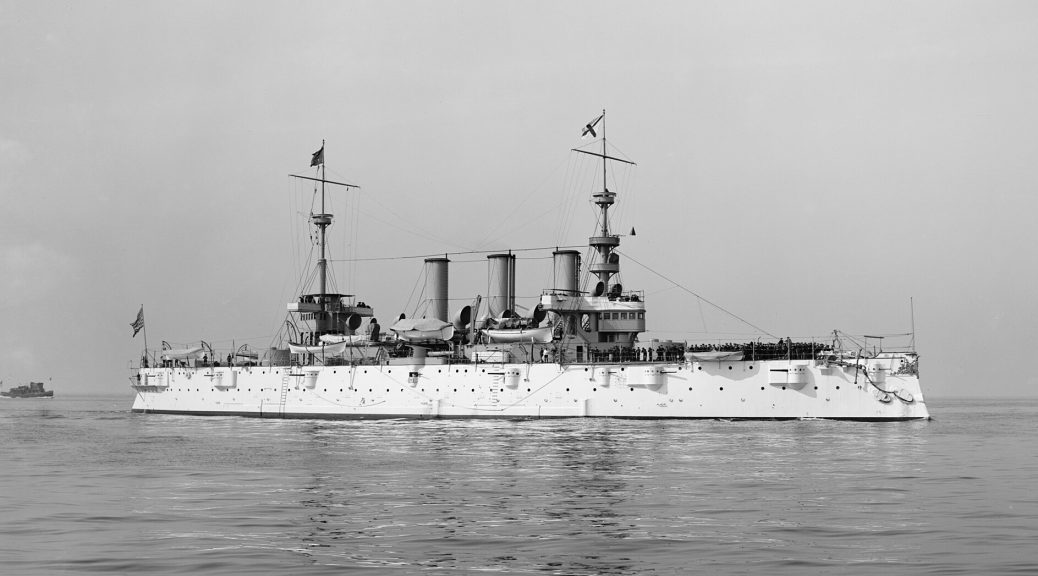
The ultimate Subic Bay dive highlight in Subic Bay (Philippines): The USS New York. Built in the 1890s and a veteran of both World Wars, this is one of the coolest wrecks in the Philippines. You can find her at a depth of 17–27 meters, with her massive 8” guns still fully intact and waiting to be explored.
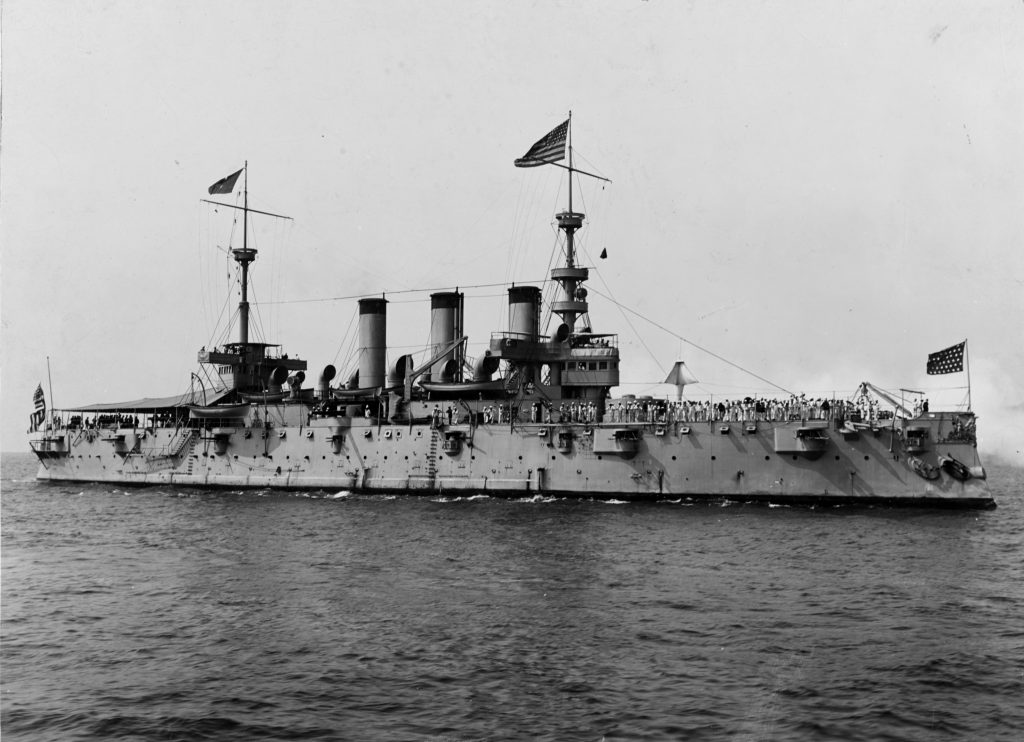
From Proud Flagship to Legendary Dive Site
The USS New York (ACR-2) is one of the most historically significant and fascinating shipwrecks in Asia. Today, the former pride of the U.S. Navy rests at the bottom of Subic Bay in the Philippines, acting as a powerful magnet for wreck divers from all over the globe.
When the USS New York was launched in the 1890s, she was the fastest and most modern armored cruiser in the world. Serving as a powerful instrument of U.S. “gunboat diplomacy,” she became the proud flagship of the Asiatic Fleet. Over her long career, she played a role in three major global eras:
The Spanish-American War (1898): She served as the flagship during the blockade of Cuba and participated in the decisive Battle of Santiago de Cuba, destroying the Spanish fleet.
World War I (1914–1918): To free up the name “New York” for a new battleship, she was renamed USS Saratoga in 1911 and later USS Rochester in 1917. She patrolled the Atlantic and escorted vital troop convoys.
World War II (1941): Her final chapter unfolded shortly after the attack on Pearl Harbor.
💥 The Dramatic End on Christmas Eve
By 1933, the aging cruiser had been decommissioned and laid up in Subic Bay, serving as a floating store ship and spare parts depot. As Japanese forces rapidly advanced across the Philippines in December 1941, the U.S. Navy faced a grim decision: to prevent her heavy artillery from falling into enemy hands, the USS New York was deliberately scuttled (sunk by her own crew) on December 24, 1941 (Christmas Eve).
🤿 The Wreck Today: A Diver’s Paradise
Today, the USS New York is widely considered the highlight wreck of Subic Bay and ranks among the top wreck diving sites worldwide.
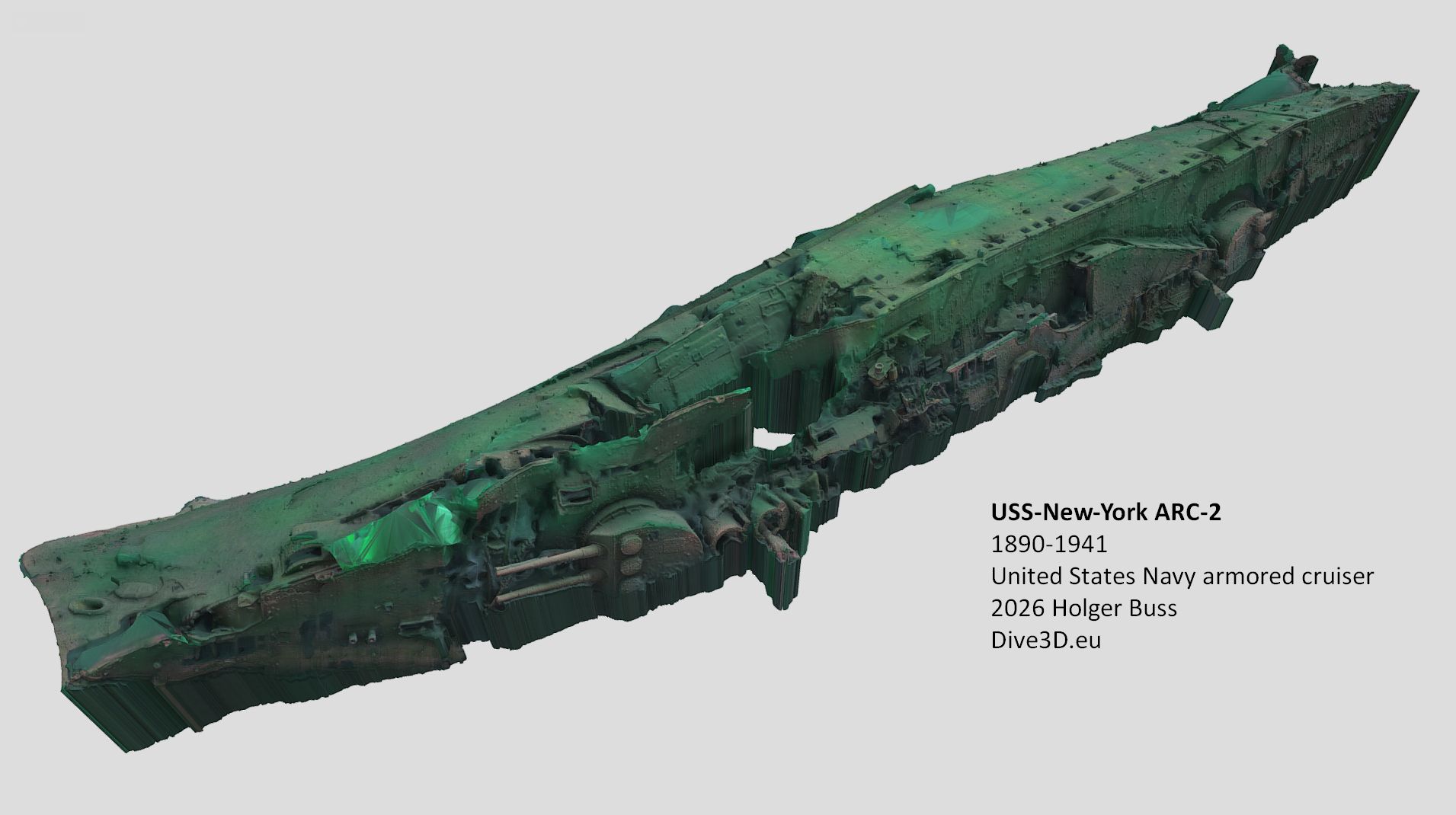
The Layout: The massive ship lies on her port (left) side in depths ranging from 17 to 30 meters (55 to 100 feet). Because it sits near a river mouth, currents can be strong and visibility often ranges between 5 to 15 meters, giving the wreck an eerie, mystical atmosphere.
Underwater Highlights: * The monstrous 8-inch (200 mm) main guns are completely intact and still protrude majestically into the deep. One of her giant ship propellers is clearly visible at the stern and makes for an iconic underwater photo.
Spanning over 110 meters (380 feet) in length, the wreck is so massive that it takes multiple dives to explore fully.
⚠️ Critical Note for Divers
While the exterior of the ship can be safely explored by experienced recreational divers (Advanced Open Water), entering the inside of the vessel is highly dangerous. The engine rooms and corridors are tight, pitch black, and heavily silted. Accidentally kicking up sediment can reduce visibility to zero in a matter of seconds. Therefore, wreck penetration is strictly reserved for certified technical/wreck divers.
Short Facts for Your Sidebar / Info Box:
Facts
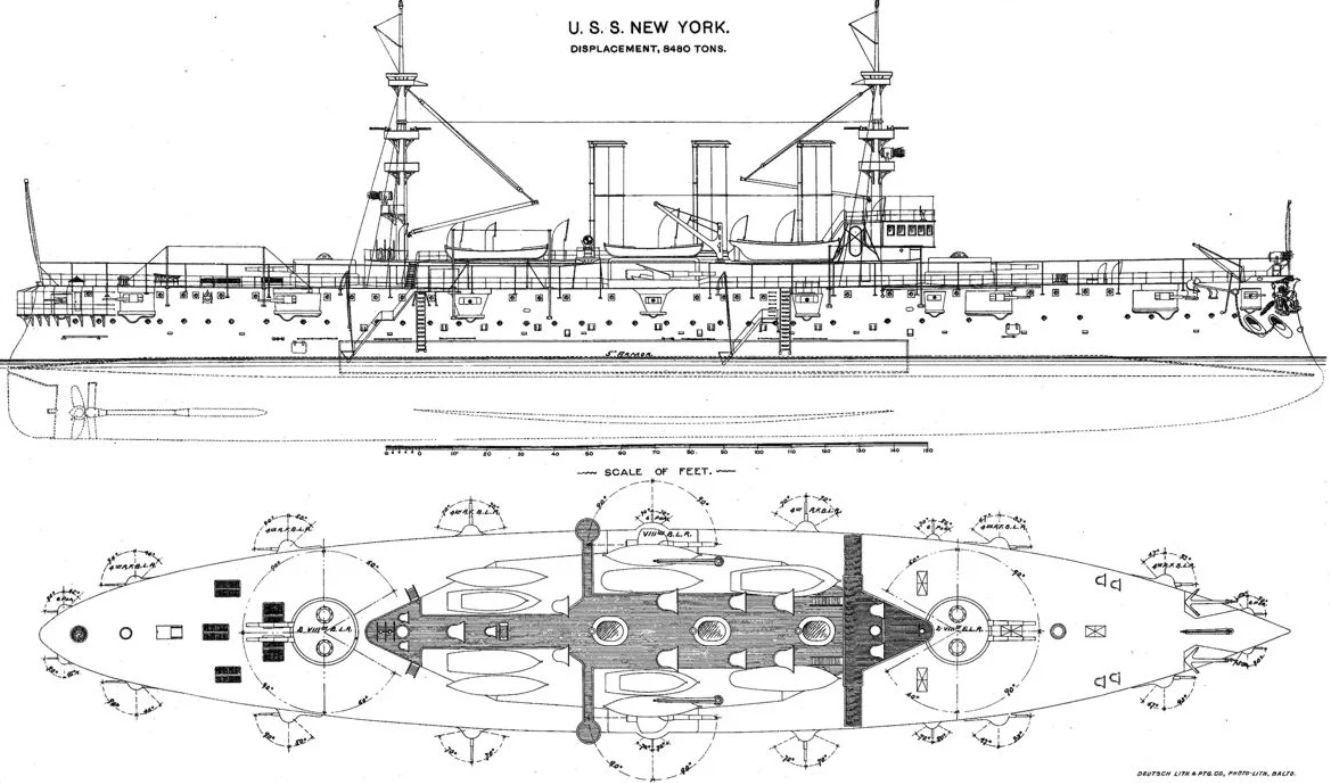
- Ship Type: Armored Cruiser (Armored Cruiser No. 2)
- Names over time: USS New York ➡️ USS Saratoga ➡️ USS Rochester
- Launched: 1891
- Sunk: December 24, 1941 (Scuttled)
- Length: 117 meters (approx. 110 meters of the wreck remain intact)
- Diving Depth: 17m / 55ft (top side) to 30m / 100ft (sea floor)
- Location: Subic Bay, Luzon, Philippines
The dive


The wreck lies in a depth of 17–27 meters (56 to 89 feet). Unfortunately the visibility is quite poor, because she is laying close to the harbor. When I dived there, we needed to get permission from the harbor to dive her. I recommend a guide and full technical wreck certification for penetration.
I scanned the wreck in January 2026. As mentioned, the vis was poor, especially in the deeper areas like the cannons and propeller. There was the vis less than 1m (3ft).
Rendering the model
Due to the conditions, the pictures I got from the scan were lousy. It took three month to render the 3D model until it was good enough for a 3D print.
Model


Sketchfab

