
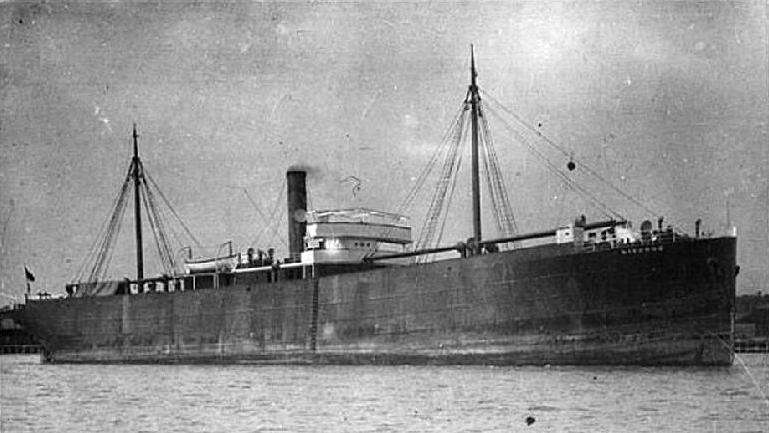
The vessel was constructed in 1909 by Earles Shipbuilding & Engineering Co. Ltd. in Hull, England. Originally named the Livorno, the cargo ship was launched in December 1909. With a length of 91.5 meters and a beam of 13 meters, the ship was a standard example of early 20th-century British merchant engineering.
Owned and operated by Thomas Wilson Sons & Co Ltd, the Livorno commenced its maiden voyage in January 1910. Its primary trade routes linked Hull and London with Mediterranean and Black Sea ports, including Constantinople and Novorossick. The vessel remained in continuous service for over two decades, navigating these routes throughout the duration of World War I.
Ownership Change and Rebranding
In 1935, the ship was sold to the Hellenic Shipping Company, based in Piraeus, Greece. Following the acquisition, the vessel was renamed the Turkia. Under Greek ownership, its operations continued in the years leading up to World War II, primarily focused on the transport of various commercial and industrial supplies.
Final Voyage and Loss
In May 1941, the Turkia departed from New York bound for Piraeus.
The cargo consisted of strategic materials, including:
- Steel and industrial parts
- Military vehicles
- Small arms and ammunition
- High explosives
Due to Axis control of the Mediterranean entrance at Gibraltar, the ship was diverted on a long-distance route around the Cape of Good Hope, traveling up the East African coast into the Red Sea.
On May 17, 1941, while navigating near the Gulf of Suez, a fire was reported in hold No. 3. Because this compartment contained explosives, the crew was unable to contain the blaze and was ordered to abandon the vessel. Approximately ten minutes after the evacuation, the cargo detonated, causing the ship to sink immediately. The sinking was documented by maritime authorities, including Anne Crowe of Lloyd’s of London.
The dive
We scanned and dived the wreck during the Red Sea Wreck Academy exploration week in May 2026. It lies in a depth of 24m (78ft)


The model
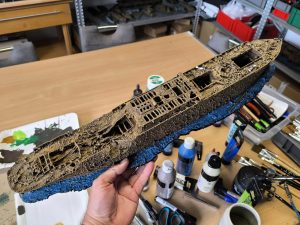
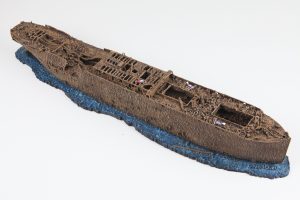
You can find the STL Files for 3D printing in my Shop




Sketchfab


