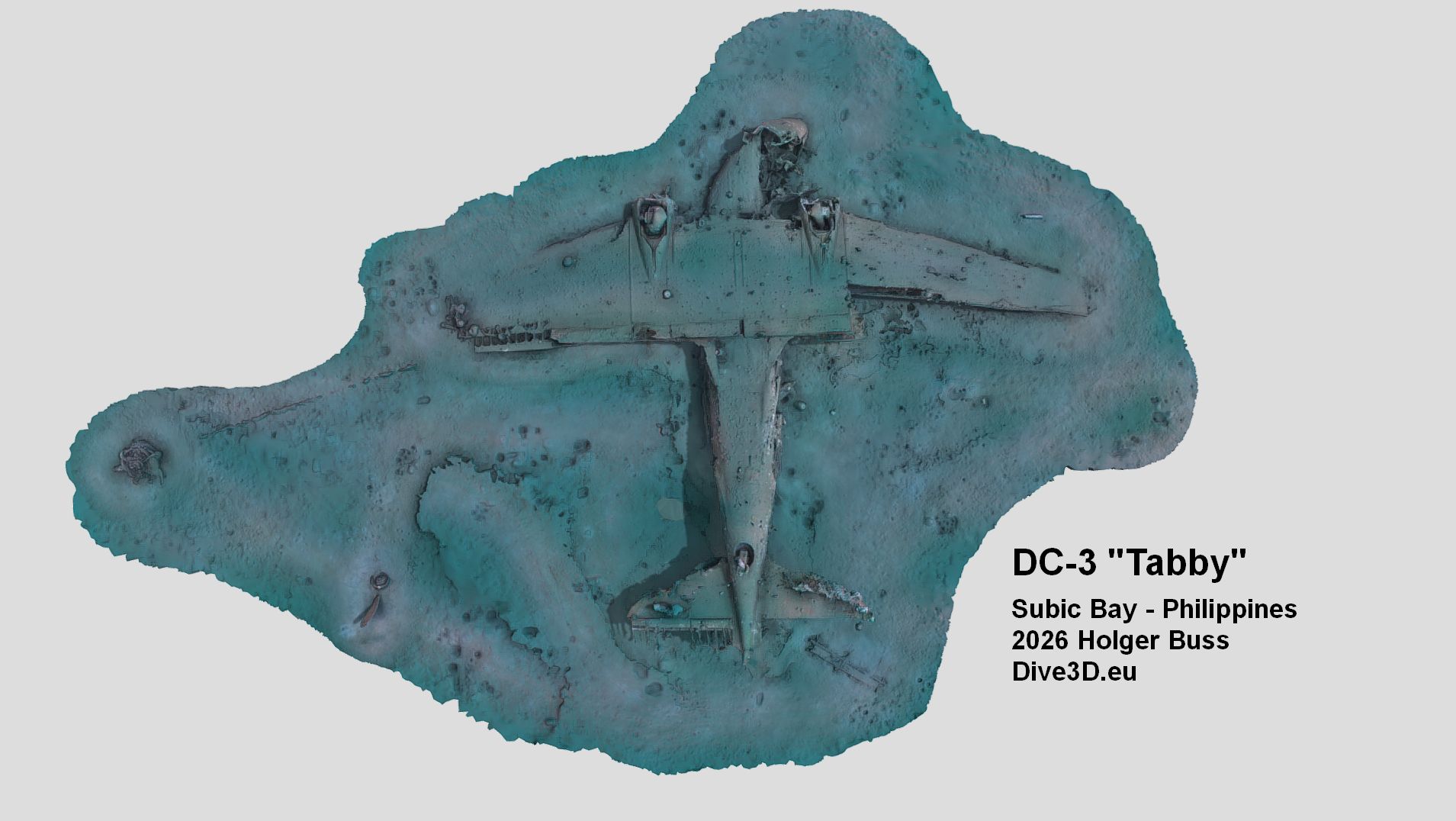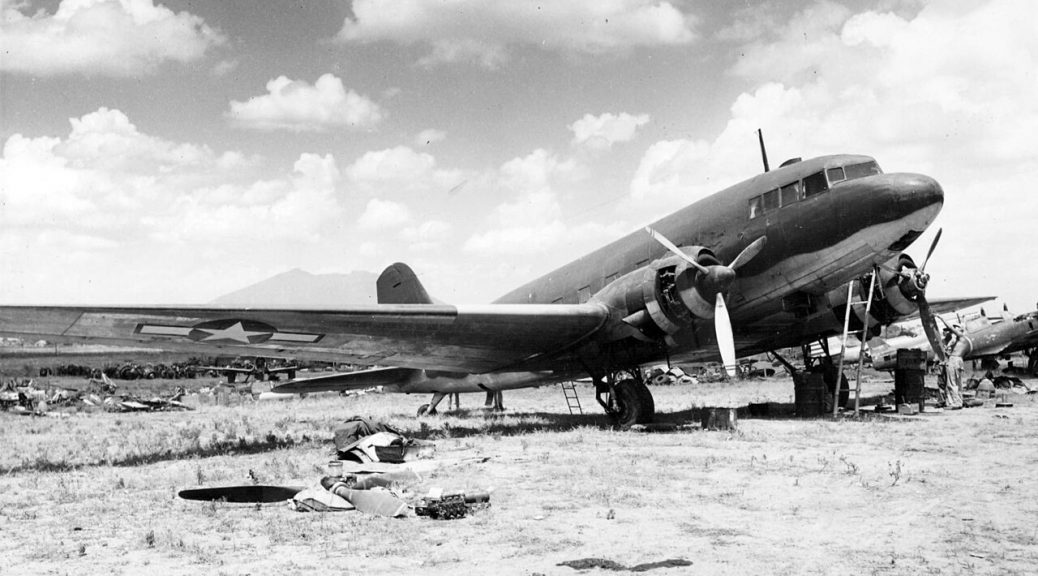
For technical divers visiting the Philippines, the Tabby DC-3 (a Japanese Showa L2D) represents one of the most rewarding and pristine aviation wrecks in the region. Resting far deeper than the bay’s famous Spanish-American War wrecks, it remains a silent, well-preserved monument to WWII history. While no official flight records exist, the damage to the airframe and its location suggest the Tabby was likely shot down by Allied forces during the liberation of the Philippines in 1945 or suffered a catastrophic engine failure leading to a high-speed ditching in the bay
- Crew: 2-4 (up to 5 carried in some configurations)
- Capacity: 21 passengers
- Length: 65 ft (19.72 m)
- Wingspan: 94.86 ft (28.96 m)
- Height: 16 ft 11 in (5.16 m)
- Powerplant: 2 × Mitsubishi Kinsei 43, 1’080 hp (795 kW) each
- Propellers: 3-bladed
State of the Wreck
Because it lies beyond the reach of casual recreational divers, the Tabby is in remarkable condition:
- The Airframe: The fuselage is largely intact, sitting upright on the seabed.
- The Cockpit: One of the highlights is the cockpit, where much of the framework is still visible, offering a ghostly view into the past.
- Engines & Props: The twin radial engines remain attached to the wings, encrusted in deep-water corals and sponges.
The Dive
This is not a dive for beginners. The Tabby lies in a challenging environment that requires proper training and equipment.
Depth: The wreck sits on a silty bottom at approximately 42 to 45 meters (138–148 feet).
Conditions: Visibility at this depth can be variable, often ranging from 5 to 10 meters. Due to the depth and potential currents, it is strictly a decompression dive for most.


The model

Sketchfab